Just place your order directly and it will be dispatched the next day!

The Silent Revolution: Why the U.S. Demand for Dildos is Outpacing Every Forecast
4/20/20265 min read
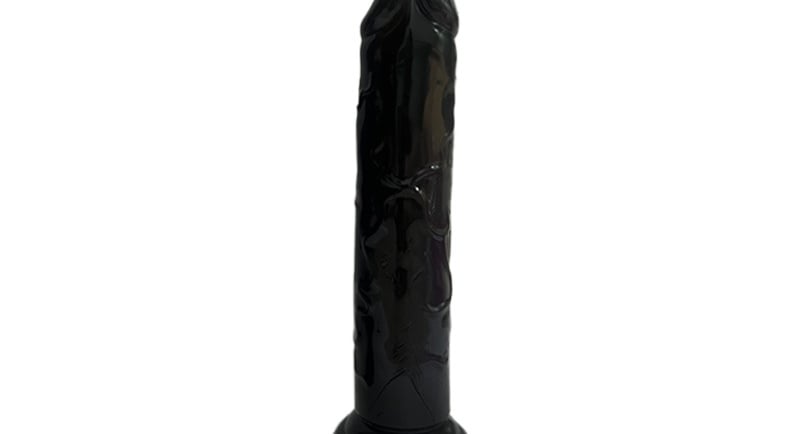
In the landscape of American consumer goods, few sectors have experienced a renaissance as quiet—yet as explosive—as the sexual wellness industry. Once relegated to the shadowy back rooms of urban arcades or purchased with a sense of shame behind tinted windows, the dildo has emerged as a symbol of a broader cultural shift.
For brands, retailers, and manufacturers looking at the numbers, the message is unequivocal: the United States is currently the engine room of the global sex tech revolution, and the demand for dildos is rising faster than nearly any other segment.
According to recent industry analytics, the United States sex toys market was valued at approximately $11.04 billion in 2024 and is on a trajectory to nearly double, hitting $19.62 billion by 2032 . While vibrators often steal the spotlight in terms of sheer volume, the dildo category is enjoying a powerful resurgence driven by changing consumer priorities: authenticity, body safety, and design-led aesthetics.
This is the story of how a taboo object became a staple of the modern American medicine cabinet.
The Numbers Don’t Lie: A Market in Hypergrowth
To understand the demand for dildos specifically, one must first look at the macro-economic picture of the sex toys market. Globally, the industry is a behemoth. Valued at $46 billion in 2025, the global market is projected to sail past $100 billion by 2035 . North America consistently dominates this landscape, holding a commanding share of roughly 37% to 38% of global revenue .
What is driving this specific surge in the U.S.?
First, the stigma is dissolving. Data suggests that over 65% of American consumers now view adult toys not as "novelties," but as legitimate health and wellness tools . This reclassification is vital. When a product moves from "novelty" to "wellness," consumer behavior changes. Shoppers are no longer looking for the cheapest disposable item; they are investing in their mental and physical health.
Second, the demographic shift is undeniable. Millennials and Gen Z, who have grown up with unfiltered access to the internet and sex-positive education platforms, view sexual agency as a given. For these generations, owning a dildo is no more controversial than owning a weighted blanket or a yoga mat.
The "Dildo" Renaissance: Moving Beyond the Vibrator
For years, the vibrator overshadowed the dildo. However, market analysts are noticing a distinct pivot. The online sex toys market, which accounts for nearly 70% of all purchases in the U.S., is seeing a surge in searches for non-motorized, body-safe silicone dildos .
Why the shift? There are three primary drivers:
1. The Rise of Body-Safe Materials (Silicone is King)
Modern consumers are educated. They understand the risks of phthalates and porous materials that were rampant in cheap toys a decade ago. Today, "medical-grade silicone" is the gold standard. Approximately 60% of the market share is now dominated by silicone products . Consumers are willing to pay a premium for dildos that are non-toxic, easy to clean, and hypoallergenic. The demand is no longer for "any dildo," but for safe dildos.
2. The Aesthetic Movement
Gone are the days of hyper-realistic, flesh-toned products that looked like medical models. The best-selling dildos in 2026 are design objects. Think pastel colors, abstract shapes, marble swirls, and minimalist packaging. Brands are leveraging "Sinstagram" (sexual wellness Instagram) and TikTok to market dildos that look like sculptures. For a consumer base that lives in studio apartments, a product that can sit on a nightstand without embarrassment is essential.
3. The Wellness Connection
Dildos are increasingly being marketed for therapeutic use. Whether for pelvic floor therapy, treating vaginismus, or simply reconnecting with one’s body post-partum, the "health" angle is driving sales. Unlike vibrators, which offer a specific sensation, dildos offer a diverse range of sizes, textures, and firmness levels that cater to therapeutic exploration.
The E-Commerce Explosion: Privacy as a Service
The primary catalyst for the dildo demand in the U.S. is the maturation of e-commerce. In 2024, e-commerce channels accounted for 57% of all sex toy sales in the U.S., and in the dildo category, that number is likely higher .
The reason is simple: privacy.
Amazon, specialty retailers like Lovehoney, and direct-to-consumer (DTC) brands have perfected the art of the discreet supply chain. Over 68% of buyers cite "discreet packaging" as a deciding factor in their purchase . This removes the psychological barrier of the "embarrassing package." Furthermore, the rise of "Buy Now, Pay Later" (BNPL) services has allowed consumers to invest in higher-quality, premium dildos ($80–$150 range) without the upfront financial sting .
As one market report noted, the U.S. online retail sector is estimated at over $1.4 trillion, and the sexual wellness category is one of the fastest-growing verticals within that space .
The Tech Integration: Smart Dildos and AI
While traditional dildos are non-motorized, the broader category is benefiting from the "sex tech" halo. We are seeing the rise of app-connected devices. While vibrators lead in AI integration, the dildo market is innovating through "teledildonics"—devices that can be controlled via smartphone over the internet .
For a country as geographically mobile as the U.S., where couples often live in different cities for work, long-distance intimacy products are booming. Approximately 48% of purchase decisions are influenced by whether a product has smart or app-enabled features . The dildo is no longer just an object; it is a communication device.
The LGBTQ+ Influence and Inclusivity
The U.S. market is unique in its aggressive push toward inclusivity. The "others" segment (non-binary, gender non-conforming, and LGBTQ+ specific marketing) is growing rapidly . Brands that succeed are those that market dildos to everyone—not just single women.
For transgender men, "packers" (dildos used for gender affirmation) are a booming sub-niche. For gay men, high-quality silicone dildos for anal play are a staple of the market. The U.S. market has moved away from gender-specific marketing (pink for women, black for men) toward a gender-neutral, "pleasure for all" approach. This inclusivity expands the total addressable market significantly.
What Does the Future Hold? (2026-2035)
If you are a manufacturer or retailer looking at this space, the trajectory is clear.
By 2030, the U.S. market is expected to cross the $17 billion threshold for all sex toys . Dildos will capture a larger share of this pie as vibrator saturation increases.
Key trends to watch include:
Sustainability: Eco-friendly dildos made from biodegradable materials or recycled silicone are emerging. 46% of consumers show a preference for eco-conscious materials .
Customization: 3D-printed dildos tailored to a partner's specific anatomy or firmness preference are moving from niche to mainstream.
The "Dual" Market: Products that function as art (displayable) and tools (functional) will command the highest price points.
Conclusion
The demand for dildos in the United States is not a flash in the pan. It is a structural shift driven by the collapse of stigma, the rise of e-commerce logistics, and an unwavering consumer focus on health.
For businesses, the opportunity lies in quality and branding. The American consumer has spoken: they do not want cheap, toxic jelly rubber hidden in a plain box. They want beautiful, safe, silicone sculptures delivered to their door the next day.
The silent revolution is over. The dildo has found its voice—and it is ringing the cash register all the way to a $20 billion valuation.
TOYS-SEX
Sex Toys | Vibrators | Male Toys | Dildos | Lingerie | Bondage
Intimacy
Desire
silicone@silic0ne.com
+8618819720420
© 2025. All rights reserved.